

Strength Training for Weight Loss: Why Lifting Weights Works Better Than Cardio Alone

If your weight loss plan is built entirely around the treadmill and a calorie deficit, you're leaving your most powerful tool on the table: strength training.
For years, the default advice for losing weight has been "eat less, do more cardio." And while cardio has its place, it's only half the equation. The research — and what we see every week with clients here in Chelsea — is clear: strength training is one of the most effective, and most overlooked, tools for sustainable weight loss.
Here's why lifting weights matters just as much as the number on the scale.

Muscle Is Metabolically Active Tissue
Every pound of muscle you carry burns calories, even at rest. Cardio burns calories while you're doing it, then the effect fades. Strength training builds tissue that keeps your metabolism elevated around the clock.
This is why two people can lose the same amount of weight and end up with completely different bodies and completely different long-term outcomes. Someone who loses weight through diet and cardio alone often loses a mix of fat and muscle. Someone who strength trains through a fat loss phase preserves — and often builds — the muscle that keeps their metabolism working for them, not against them.
The "Afterburn Effect" Keeps Burning Calories Post-Workout
Strength training triggers something cardio doesn't do nearly as well: excess post-exercise oxygen consumption, or EPOC. In plain terms, your body keeps burning extra calories for hours after a lifting session as it repairs muscle tissue and restores itself to baseline.
A steady-state cardio session mostly stops burning calories the moment you step off the machine. A well-structured strength session keeps paying off long after you've left the gym.
Strength Training Protects You From the "Skinny Fat" Trap
This is the part most weight loss advice skips entirely. Losing weight without strength training often means losing muscle along with fat — which can leave you lighter on the scale but with a higher body fat percentage and a slower metabolism than when you started. It's a common frustration: the weight comes off, but the body doesn't look or feel the way people expected.
Strength training flips that outcome. By giving your body a reason to hold onto muscle during a calorie deficit, you lose fat while maintaining — or improving — muscle tone, strength, and overall body composition. The result is a leaner, more defined physique, not just a smaller one.
It Makes Weight Loss Sustainable, Not Just Fast
Crash diets and cardio-only plans tend to work short-term and fail long-term, largely because they aren't sustainable and because they erode the muscle mass that supports a healthy metabolism. Strength training builds a body that's more resistant to the yo-yo effect. More muscle means a higher resting metabolic rate, which means more room for a sustainable, less restrictive approach to eating.
This is also why strength training tends to build lasting habits in a way cardio-only routines often don't. Progressive strength training gives you a clear scoreboard — the weight on the bar, the reps in the set — that keeps people engaged and coming back long after motivation alone would have run out.
What This Looks Like in Practice
You don't need to become a powerlifter to get these benefits. Two to three focused strength sessions a week, built around foundational movement patterns — squatting, hinging, pushing, pulling — is enough to change your body composition, your metabolism, and how your clothes fit.
What matters more than the exact program is whether it's built for you: your current strength level, your schedule, your goals, and the way your body actually responds to training. That's the piece most people are missing, and it's not something a generic app or a crowded class can give you.
Why This Is Harder to Do Alone
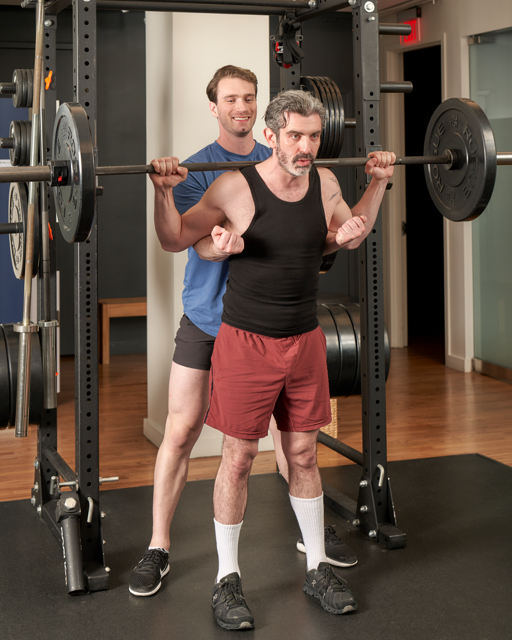
Strength training only delivers these results when it's programmed correctly — progressive overload, proper form, and a plan that adapts as you get stronger. Without that structure, it's easy to plateau, get hurt, or spend months in the gym without seeing the changes in body composition that strength training is supposed to deliver.
That's the gap between working out and being coached.
At CRW Fitness, our approach is coached, not managed. That means every session — whether one-on-one or in one of our small group sessions, capped at six people — is built around you specifically: your goals, your movement patterns, your progress. It's not a class you follow along to. It's individualized strength training with the accountability and structure that actually produces results, in a private suite near 29th Street in Chelsea.
If you're serious about losing weight and want it to stick, strength training isn't optional — it's the foundation. And having someone in your corner making sure you're doing it right is what turns a good plan into real results.
Ready to see what a strength-based approach could do for you?
Book a complimentary Activation Session — a one-hour intro session including a goals discussion and a mobility and strength assessment — and find out what a coached plan looks like for your body and your schedule.
Frequently Asked Questions
Does strength training really help with weight loss, or is cardio better?Both play a role, but strength training is often the more overlooked piece. It builds and preserves muscle, which keeps your metabolism elevated even when you're not exercising — something cardio alone doesn't do as effectively.
Will lifting weights make me bulky?No. Building visible muscle bulk requires a specific, sustained training and eating approach that most people simply aren't doing. For most people, strength training during weight loss creates a leaner, more toned appearance, not a bulkier one.
How often should I strength train to lose weight?Two to three sessions a week focused on major movement patterns is enough to see meaningful changes in body composition, provided the program progresses over time and pairs with sound nutrition.
Can beginners do strength training for weight loss?Yes — in fact, beginners often see the fastest results, since the body responds quickly to a new stimulus. The key is proper coaching from the start, so form and progression are built correctly.


Comments